
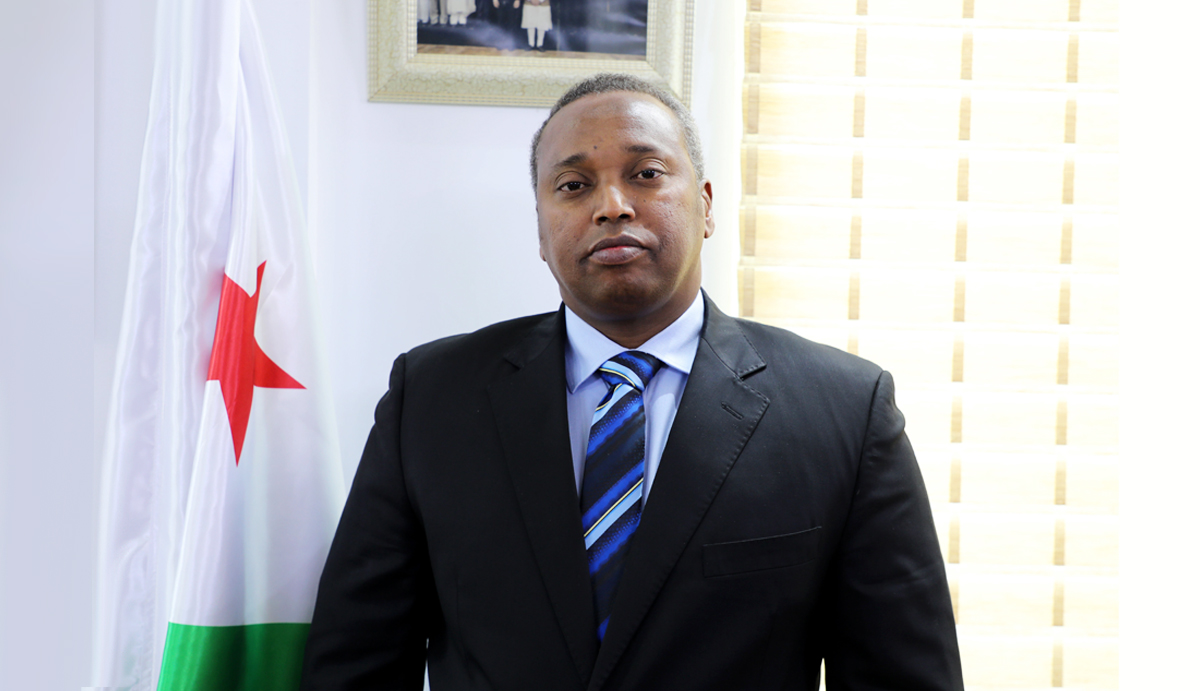
16 Sep Interview with His Excellency Mr. Yonis Ali Guedi, Minister Energy and Natural Resources, Djibouti
Could you provide an overview of Djibouti’s natural resources and discuss current trends in energy exploration and production in the country?
Djibouti is rich in natural resources, especially mining and minerals. In terms of mining, our country has enormous potential in mining and mineral resources that are still underexploited, including salt, gold, black earth, and rare earth elements according to certain studies. The industrial minerals present in large quantities in our subsoil can be exploited on an industrial scale. Among these minerals, we can mention pozzolan, gypsum, limestone, bentonite, and silica sand. Additionally, our subsoil contains precious metals, including gold. On the energy front, our country has strong potential in renewable energies, particularly solar, wind, geothermal, tidal, and biomass energy. Moreover, our potential for green hydrogen production is also significant.
One of your ministry’s great ambitions is to increase electric power and achieve a 100% electrification rate by 2035. What is the ministry’s strategy to achieve this goal, and in which areas are you investing to reach it?
We have developed a national energy policy and implemented sectoral strategies to achieve the set goals. One of our greatest ambitions is to substantially increase our electric power and achieve a 100% electrification rate by 2035 and beyond.
Our strategy to achieve this is based on an energy mix. This involves combining electricity production from the Boulaos thermal power plant (with a gradual decrease in fossil fuel-based energy production) and the increasing capacity of renewable energies (notably importing hydroelectric power from Ethiopia, commissioning the Ghoubet wind farm with a capacity of 60 Megawatts, and the upcoming construction of the Grand Bara solar power plant with a capacity of 30 Megawatts). We aim for a clean energy production target of 100% by 2035.
Could you explain the benefits of clean energy production in Djibouti and the potential of renewable energies to shape the country’s future? What types of partnerships are you looking for in this field?
In 2023 we inaugurated and commissioned the first wind farm at Ghoubet. This project, structured on the Public-Private Partnership (PPP) model, is the result of fruitful and efficient collaboration between the government and global investors.
Through the development of clean energies, we want to ensure the security of our energy supplies, succeed in our transition from fossil fuels to renewable energies, drastically reduce our greenhouse gas emissions, and, above all, achieve our energy independence or sovereignty.
Our potential in clean energies is considerable because we have one of the highest daily sunlight rates in Africa and the world, significant wind speeds, and a geothermal energy potential amounting to several thousand megawatts.
Regarding partnerships, since our country has implemented legal reforms in the energy sector, notably the adoption of the Law on Independent Power Producers (IPP) which liberalizes the electricity production market, we are developing our large-scale energy projects under the PPP model.
We signed an MoU with the American company CWP Global in 2022 for strategic cooperation to develop the Hayyu Green Hydrogen Hub-HGH2 project. This focuses on the development and production of green hydrogen in our country, specifically in the Obock region.
With abundant solar and wind resources, flat land, and sea access, our country has a competitive advantage in producing green hydrogen at competitive costs. Additionally, modern transport and logistics infrastructure dedicated to trade (notably the numerous versatile port facilities) will facilitate the export of produced green hydrogen to international markets. We aim to supply green hydrogen to the thousands of ships passing through the Bab El-Mandeb Strait and to create opportunities arising from the green hydrogen industry.
In the hydrocarbon sector, the Damerjog Industrial Park is on its way to becoming a central hub for the storage and distribution of hydrocarbons in our country and the region. It should be noted that the construction of a multi-product oil storage terminal with a capacity of 1 million m³ is currently under development in partnership with private stakeholders. The jetty will be operational and ready to receive the first ship by the end of the year. This infrastructure aims to meet the growing demand of local and foreign companies for the storage and distribution of crude oil and refined products. In parallel with oil, LNG storage tanks are also being developed to diversify the energy supply and meet the growing demand for natural gas in the region.
How is Djibouti leveraging innovation and technology in the energy sector to address current challenges?
Technological innovations play a decisive role in all socio-economic fields. Through the deployment of renewable energies in our country, we are partnering with foreign companies that possess proven knowledge, expertise, and skills. Our engineers, trained at top global universities, work on energy projects alongside foreign engineers for knowledge transfer. We also have research centers in our country, such as CERD in Djibouti, as well as active centers within the University of Djibouti. Additionally, we plan to create a STAR-C center of excellence in the field of solar energy development with the support of the International Solar Alliance (ISA).
Do you have a message for the readers of Foreign Policy?
Djibouti’s energy future is bright. We want to increase our renewable energy production capacities. That said, there is a large market to capture and opportunities to seize in Djibouti. We have an investment code favorable to both national and foreign private investors, a business climate conducive to investments, and legal security allowing businesses to thrive.
Sorry, the comment form is closed at this time.